

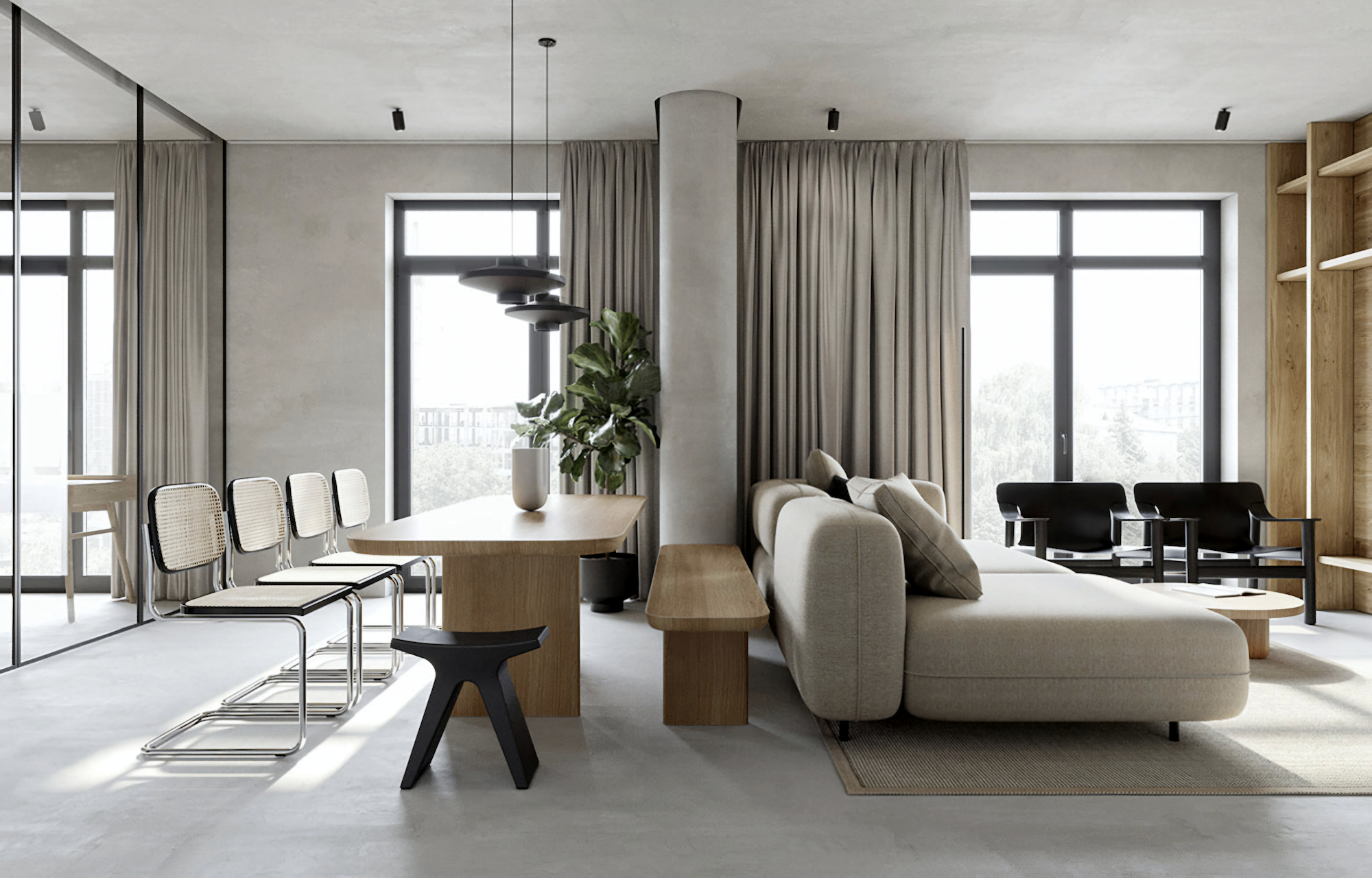
In a world obsessed with more, this space chooses less—and in doing so, becomes everything it needs to be.
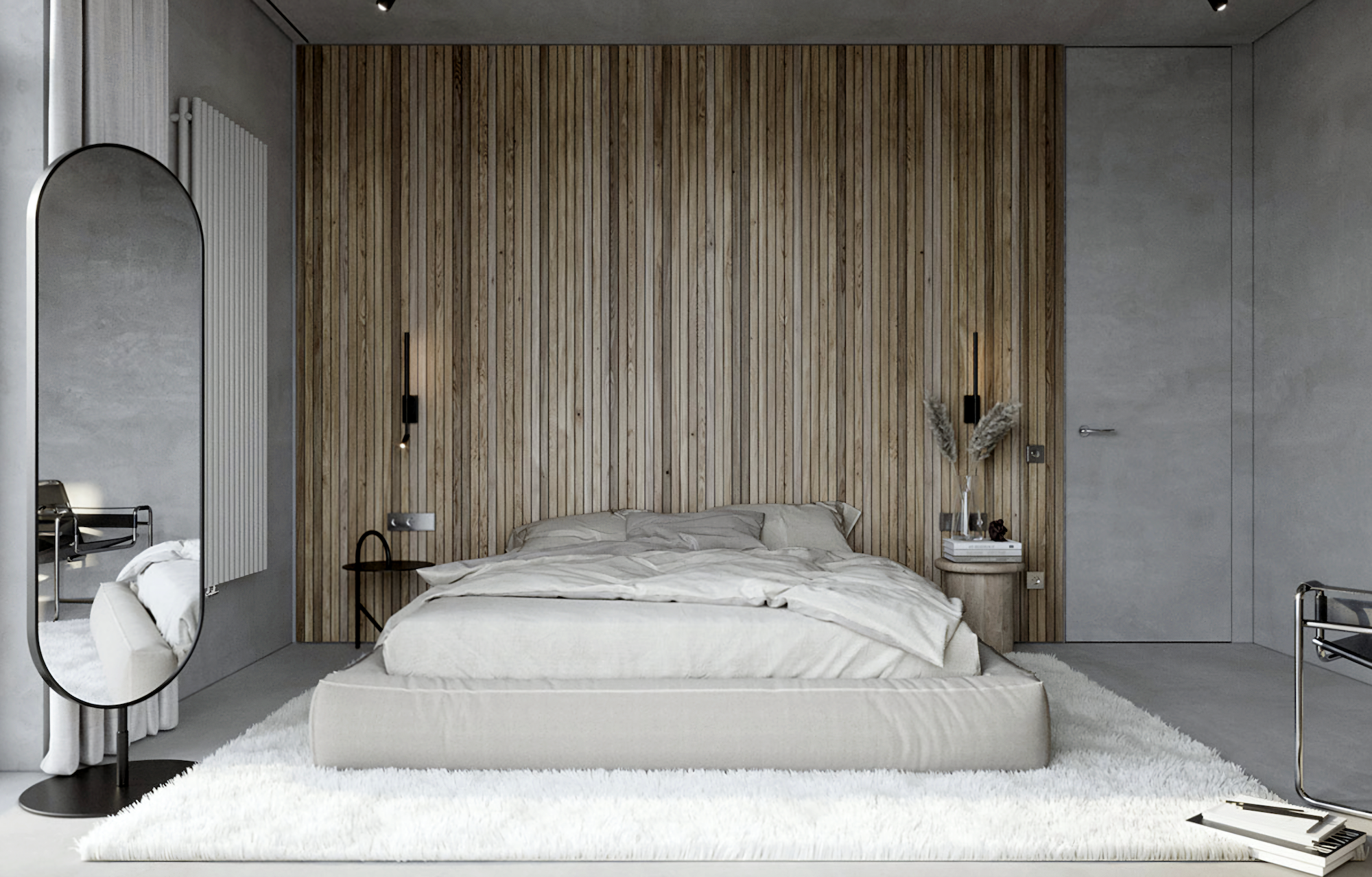
Fifty Shades of Microcement is a study in subtlety—an exploration of how one material, when treated with care, variation, and respect, can hold an entire space together without ever demanding attention. The goal was not to decorate, but to quiet the noise. To create a place where light, texture, and time do the talking.

Every surface in this space was finished in microcement floors and Venetian plaster walls, applied seamlessly to dissolve boundaries between planes. There are no abrupt transitions here—only gradients. Slight shifts in tone, softness, and movement reveal themselves slowly as the day unfolds.

At first glance, the palette feels restrained: soft greys, mineral whites, muted shadows. But look closer and the space reveals its depth. The walls carry the subtle imperfections of hand-applied Venetian plaster—gentle trowel marks, faint variations, traces of the maker’s presence. The floors, finished in microcement, ground the space with a quiet strength—industrial in origin, yet softened through tone and texture.

Warmth enters through contrast. White oak slat accents introduce rhythm and natural softness, breaking the mineral calm with organic warmth. The wood doesn’t compete with the finishes—it complements them, reminding the space that minimal does not mean cold. Light filters across these surfaces, changing their character throughout the day, making the space feel alive, never static.

Glass partitions reflect and multiply the textures, blurring the line between solidity and transparency. The architecture feels open yet grounded, industrial yet human. Every element was chosen to support a sense of calm—nothing added without purpose, nothing removed without thought.

This is not a space that demands attention.
It earns it quietly.
Fifty Shades of Microcement is about living with materials that age gracefully, surfaces that tell a story through use, light, and time. It’s about slowing down, feeling the floor beneath your feet, noticing how shadows fall, how textures reveal themselves only when you pause long enough to see them.

In a world obsessed with more, this space chooses less—and in doing so, becomes everything it needs to be.

FIN

“Between light and shadow, the stone remembers the hand that shaped it.”